Interview With Betty Medsger, Author Of The Burglary
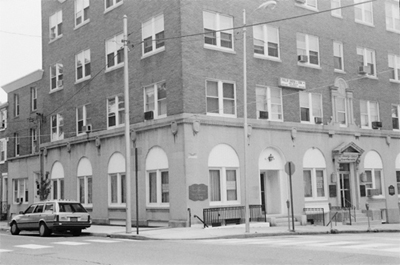
Earlier this week, I wrote an extensive book review of former Washington Post reporter Betty Medsger's The Burglary (2014, Alfred A. Knopf). This book chronicles a break-in at the Media, Pennsylvania, branch office of the Federal Bureau of Investigation in 1971, and the subsequent release to the public of files proving the F.B.I. was spending something like 40 percent of its time spying on and harassing political groups and individuals that J. Edgar Hoover didn't approve of. The burglars, who operated under the name "Citizens' Commission to Investigate the F.B.I.," were never caught, despite a five-year F.B.I. manhunt involving more than 200 agents. None of the burglars had ever even been publicly identified before Medsger's book was published.
This was a historic burglary, to put it mildly. It was also the first time modern newspapers were faced with the ethical question of whether to publish news stories which had as their sole source stolen government documents that arrived anonymously in the mail. The Washington Post broke the story forty-three years ago this Monday, while both the Los Angeles Times and the New York Times (the other two newspapers who received the files) missed the scoop.
Betty Medsger was the reporter at the Post to whom the stories were addressed. She recently decided that the history of the Media burglary was worth telling in more detail, so she tracked down seven of the eight people behind the burglary -- even though they had remained anonymous for four decades. Five of the burglars agreed to have their names and stories published, while two allowed interviews using pseudonyms (Medsger reports that one of the latter may eventually agree to being publicly named, "at some point"). As for the last burglar (who also appears in The Burglary under a pseudonym), Medsger reported: "I simply was not able to find her. I don't know where she is, even if she is alive."
The entire story is a fascinating one, which is why my book review was so long it had to be presented in two parts, and why I used what is quite possibly the longest headline I've ever written: "Before Snowden, Before WikiLeaks, Before The Church Committee, Before Deep Throat, Before The Pentagon Papers... There Was The Burglary." My headline points out that this story is not only historic, but also very relevant to today's political discussion over Edward Snowden and the N.S.A. -- especially as President Obama and Congress are now being forced to act to rein in surveillance programs, precisely because of stolen government documents leaked to the public through the media. This is also why the following interview is so extensive, because I felt it was important enough to present unedited and in full.